Damaged Roof Tiles and Leaks Are More Serious Than You Think
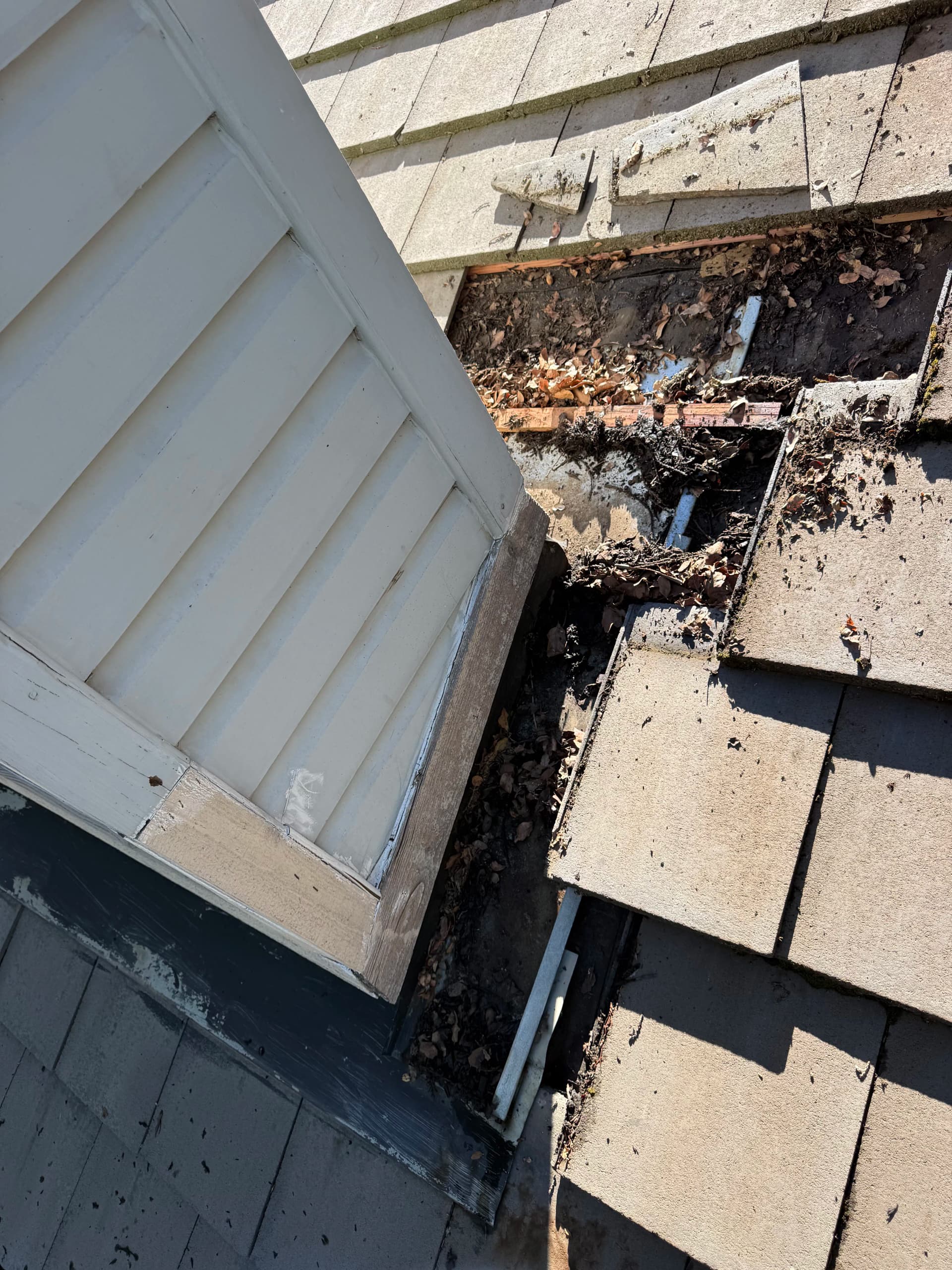
A roof leak rarely starts big. It usually begins with a cracked or displaced tile, a gap in the flashing, or debris that's been sitting in a valley long enough to trap moisture. By the time you notice a water stain on your ceiling, the problem has usually been building for a while.
That's exactly the kind of situation we deal with regularly. Leaves and organic debris packed into a roof junction, damaged tiles that have shifted out of place, exposed underlayment - these are the conditions that lead to water getting into places it absolutely shouldn't be. Left alone, that moisture works its way into the decking, the framing, and eventually your interior.
Here's what most homeowners don't realize: the visible damage is almost never the whole story. When we do a roof inspection on a home showing signs of a leak, we're looking at the full picture - flashing integrity, tile condition, drainage paths, and any areas where water could be pooling or sitting against wood. That's the only way to actually fix the problem instead of just patching over it.
Roof repairs done right mean getting into the root cause, not just sealing something up and hoping for the best. We've seen plenty of quick fixes that failed within a season because nobody addressed what was actually driving the leak in the first place. That's not how we work.
If you've spotted a stain on your ceiling, noticed a tile that looks out of place, or just haven't had your roof looked at in a few years - especially heading into the wetter months - it's worth getting a proper inspection done sooner rather than later.