Old Gutters Gone - A Proper Upgrade Underway
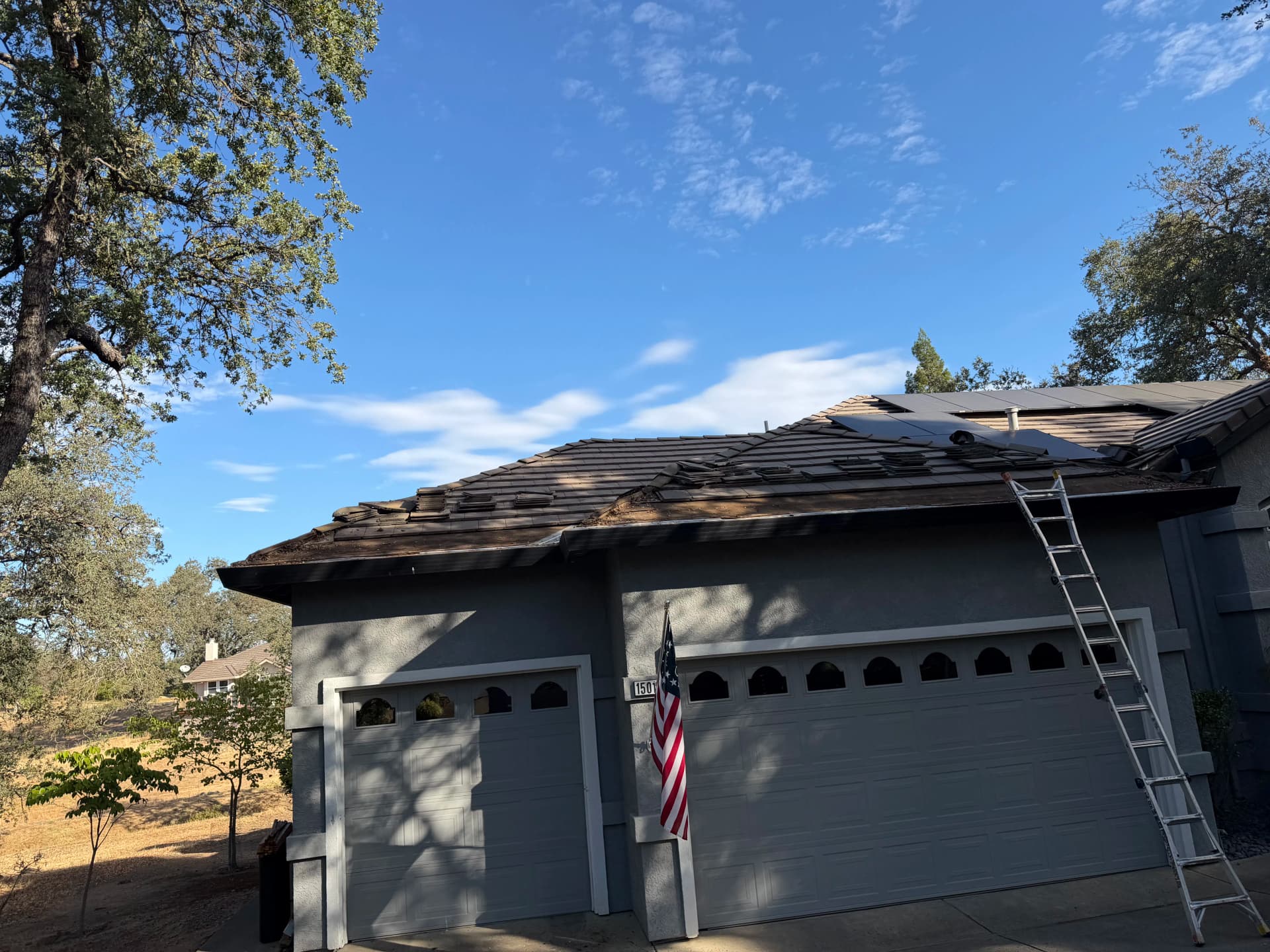
Most homeowners don't think about their gutters until something goes wrong. Water stains on the siding. Soil washing away near the foundation. A roof edge that's starting to show damage. By that point, the gutters have already been failing for a while - and the repair bill gets bigger.
Here's what we were working with on this one - gutters that had clearly run their course. Old, worn material that wasn't doing the job anymore. Before any new gutters go up, we make sure the roofline and fascia are in solid shape. Skipping that step is how you end up with new gutters failing faster than they should.
Good gutters do a lot of quiet, thankless work. They move water away from your roof deck, your siding, and your foundation. When they start pulling away or breaking down, that water has to go somewhere - and it usually finds the worst possible place to go.
We take gutter work seriously because it's directly tied to the health of your roof. A lot of what we see during roof inspections and roof maintenance visits comes back to water intrusion that started at a failing gutter line. It's a small thing that creates big problems over time.
Fall is actually one of the better times to get ahead of this. Leaves, debris, and the first heavy rains of the season will test every weak point in your drainage system. If your gutters are worn out or pulling away from the fascia, now's a solid time to take care of it before the wet weather hits.