Tile Roof Valley Replacement Done the Right Way
Roof valleys are one of those spots that don't get much attention - until there's a leak. They sit right where two roof planes meet, which means all the water from both sides funnels directly through them. On a tile roof, that's a lot of water moving through one narrow channel every time it rains.
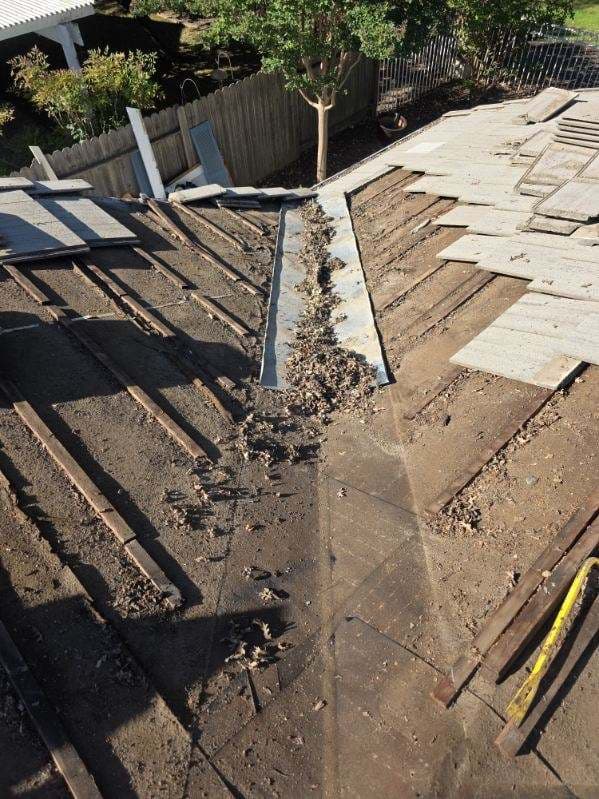
Here's what we were working with on this job. The old valley flashing had reached the end of its life. Years of debris buildup, wear, and exposure had taken their toll. Left alone, that kind of deterioration turns into interior water damage fast - ceilings, walls, insulation, framing. It adds up quickly.
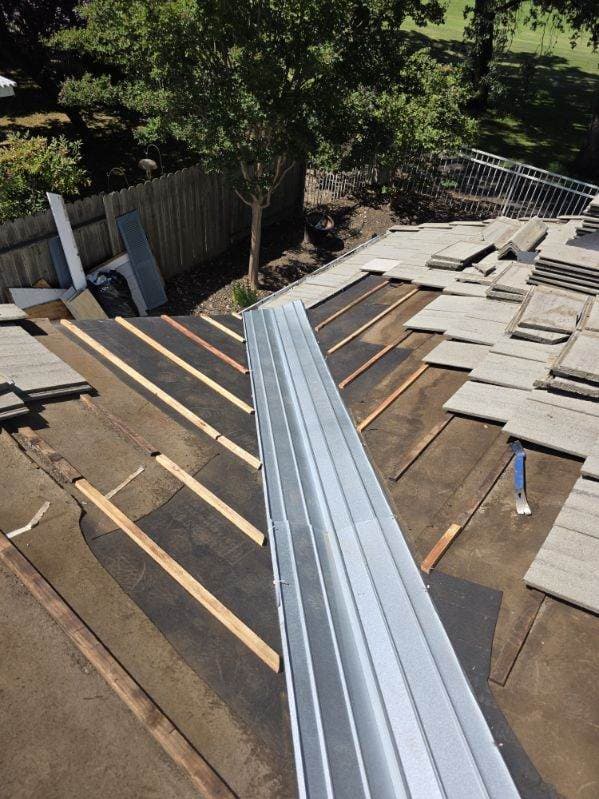
We pulled the tiles back from both sides of the valley to get proper access. That's the only way to do this job right. You can't just patch over a failing valley and call it done. We stripped it out clean, checked the underlying structure, and installed new metal valley flashing that channels water properly off the roof.
The tiles we removed went back on carefully. That's one of the advantages of tile - when you're doing a repair like this, you can pull tiles, do the work underneath, and reset them without having to replace the whole section. It keeps the scope of the repair contained while still addressing the root cause.
Catching a failing valley before it turns into a ceiling stain - or worse - is exactly the kind of roof maintenance that saves homeowners real money. If your tile roof is showing signs of wear, especially around the valleys, it's worth getting it looked at sooner rather than later.